
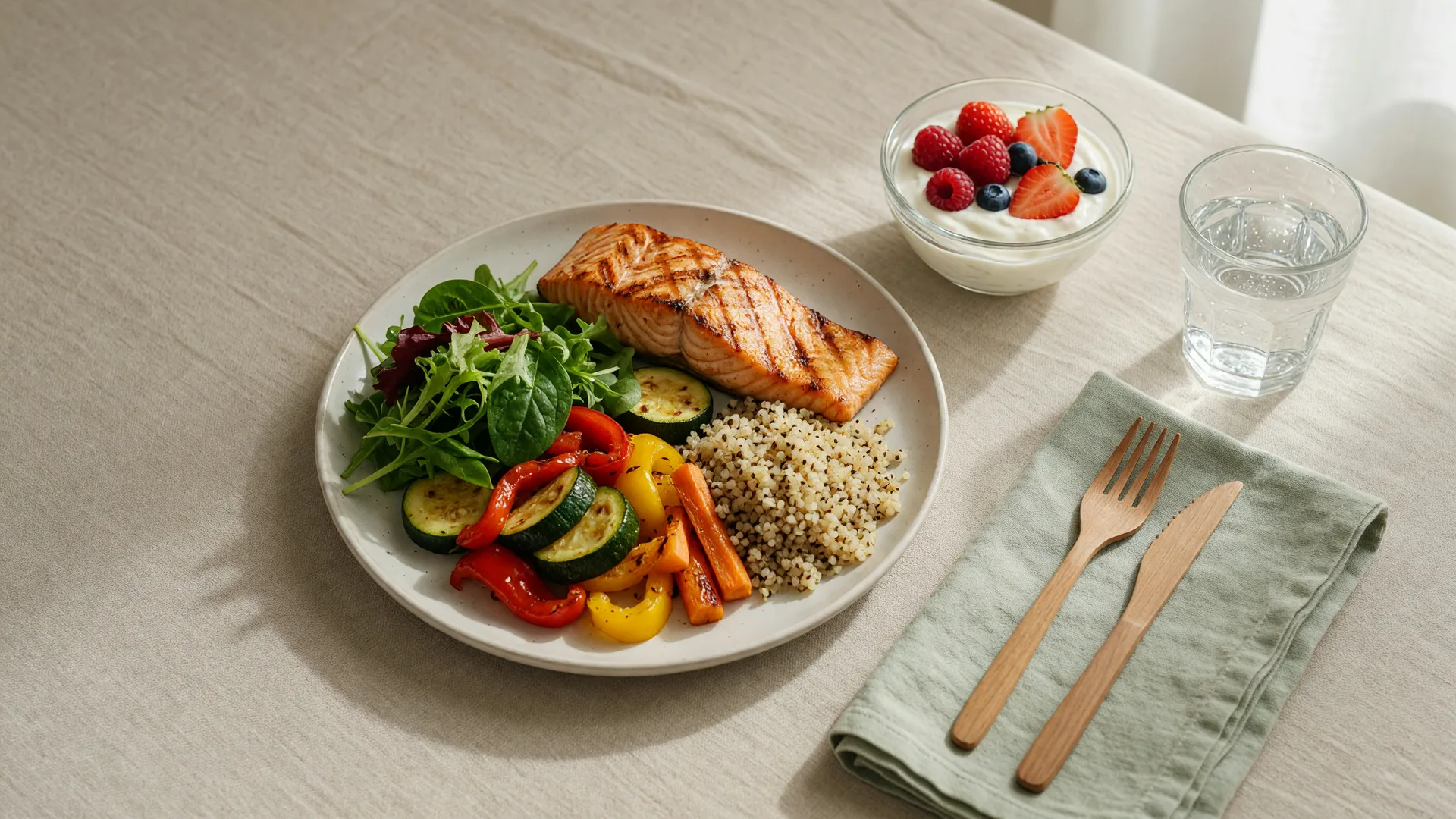
Eating well on a GLP-1 weight-management medication means shifting the focus from eating less to eating smarter, because these medicines change appetite and can make it harder to get enough protein, fiber, and fluids. There is no single GLP-1 diet, but current expert guidance is consistent about the priorities: adequate protein at every meal, smaller and slower meals, plenty of hydrating fluids, and minimally processed foods. TruHealth Primary Care pairs medication, when clinically appropriate, with nutrition counseling and follow-up monitoring rather than treating a medicine as a standalone fix.
Why does nutrition still matter on a GLP-1 medication?
GLP-1 receptor agonists work partly by slowing stomach emptying and reducing appetite, which often leads to eating less. That reduced intake is the point, but it also creates risks: without enough protein, some of the weight lost is lean muscle rather than fat, and eating too little fiber or fluid can worsen constipation and nausea. Nutrition support is what makes weight loss sustainable and keeps you feeling well while the medicine does its part.
How much protein should you aim for?
Experts generally recommend about 1.0 to 1.5 grams of protein per kilogram of body weight per day, which for many adults works out to roughly 80 to 120 grams. In practical terms, that means trying to reach 20 to 30 grams at every meal.
- Protein sources: fish, chicken and turkey, eggs, Greek yogurt, cottage cheese, tofu, tempeh, beans, lentils, and lean cuts of meat
- Eat the protein part of the meal first, before vegetables and carbohydrates
- Protein shakes with at least 20 grams of protein can help on days when appetite is very low
- Pair protein intake with resistance or strength training to help preserve muscle
What eating patterns help most?
The goal is not a restrictive meal plan but a pattern that works with the medicine's effects on appetite.
- Eat smaller, more frequent meals instead of three very large ones
- Eat slowly, over about 20 to 30 minutes, and stop when comfortably full rather than overly full
- Focus on minimally processed foods with quality protein, fiber-rich carbohydrates, and healthy fats
- Hydrate steadily with water and other zero-calorie drinks; fluids help with both nausea and constipation
- Keep highly processed foods, fried items, sweets, and alcohol to a minimum, and avoid eating close to bedtime
How can you manage nausea and constipation?
Nausea is most common when starting a GLP-1 medication or after a dose increase, and constipation tends to creep in as food intake drops. Both are usually manageable with simple adjustments: bland options such as whole-grain toast, crackers, or ginger tea on rough days; avoiding high-fat or fried foods; staying hydrated; and adding fiber gradually as tolerated. For acid reflux or indigestion, keep portions moderate and avoid lying down for two to three hours after meals. If symptoms are severe or persistent, tell your provider rather than stopping the medication on your own.
What role do exercise and lifestyle habits play?
Medication and meals only go so far. Regular activity, especially strength training, helps preserve muscle during weight loss, and walking or other aerobic exercise supports heart health and mood. Sleep and stress management matter too, because both influence appetite and eating choices. TruHealth's lifestyle and wellness counseling is designed to support exactly these habits alongside medical treatment.
How does TruHealth support patients during weight management?
At TruHealth Primary Care in Locust Grove, Georgia, medical weight management starts with a full evaluation and an individualized plan. GLP-1 medications are considered when clinically appropriate, but they are never automatic, and no outcomes are guaranteed. Ongoing visits monitor progress, manage side effects, and revisit nutrition and activity goals so the plan stays on track when doses change or after goals are reached. Telehealth visits are available for eligible Georgia patients.
Frequently asked questions
Do you have to count calories on a GLP-1 medication?
Will I lose muscle on a GLP-1 medication?
What should I eat if I feel nauseated on my medication?
Does TruHealth provide nutrition support with weight management?
Sources and further reading
- I Am Taking a GLP-1 Weight-Loss Medication, What Should I Know?, JAMA Internal Medicine (2025)
- GLP-1 Nutrition: What to Eat, Mayo Clinic Press
- Nutritional Priorities to Support GLP-1 Therapy for Obesity: A Joint Advisory (ACLM, ASN, OMA, TOS, 2025)
- Diet and Exercise Still Important When Taking Weight-Loss Medication, Harvard T.H. Chan School of Public Health
Educational purpose: This article is for general educational purposes and is not medical advice, diagnosis, or treatment. Always consult a qualified healthcare provider about your specific health situation.
About the author: Tina Jordan, MSN, APRN, FNP-C, is a board-certified Family Nurse Practitioner and the lead provider at TruHealth Primary Care in Locust Grove, Georgia.