
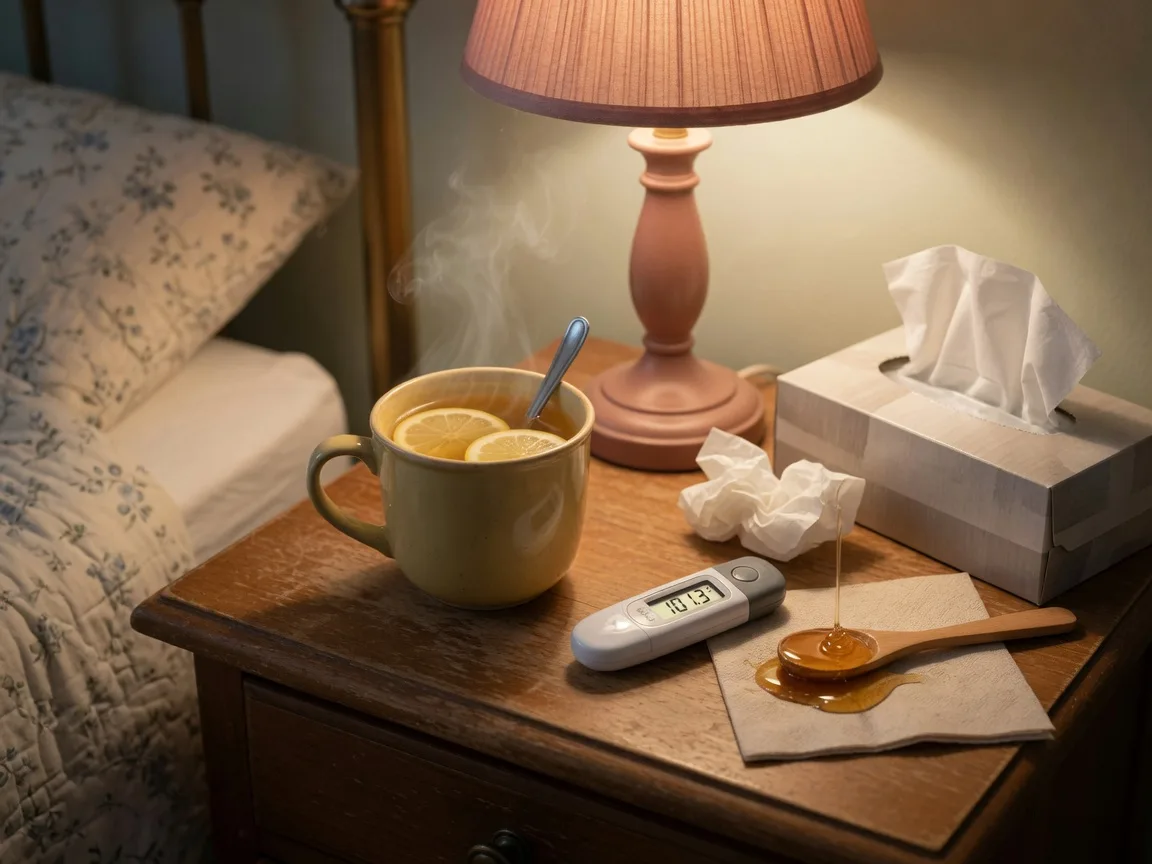
Most sore throats are caused by viruses and get better on their own within a week. Strep throat, caused by group A Streptococcus bacteria, is different: it usually comes on suddenly with fever and throat pain, and it is treated with antibiotics only after a test confirms it. Knowing the difference matters because antibiotics do not help viral infections and are not prescribed for symptoms alone. TruHealth Primary Care in Locust Grove can evaluate a sore throat and test for strep when appropriate.
What are the signs of strep throat?
Strep throat typically starts suddenly with a sore throat and a fever, often 101 degrees or higher. The throat may look red with white patches or pus on the tonsils, and the glands in the neck may be swollen and tender. A key clue is what is missing: strep is less likely when there is a cough, runny nose, or hoarse voice, which point to a viral infection.
- Sudden, severe sore throat.
- Fever, often 101 degrees or higher.
- Red throat with white patches on the tonsils.
- Swollen, tender lymph nodes in the neck.
- No cough, runny nose, or hoarse voice.
How is strep throat confirmed?
Strep is confirmed with a rapid strep test, which swabs the back of the throat and returns results within minutes. Because the rapid test can occasionally miss the bacteria, a negative rapid test in a child is often confirmed with a throat culture. Testing is most useful for people with a moderate-to-high chance of strep based on their symptoms; providers do not routinely test or treat every sore throat.
When do antibiotics make sense?
Antibiotics are used only when strep is confirmed or strongly supported by testing, because they treat bacterial infections and do not help viral ones. Treating confirmed strep shortens the illness, reduces spread, and lowers the risk of complications such as rheumatic fever. Overuse of antibiotics for viral sore throats does not help and contributes to resistance, which is why guidelines recommend testing before treating.
How can you feel better at home?
For viral sore throats, rest, fluids, and over-the-counter pain relievers such as acetaminophen or ibuprofen are the mainstays of care. Warm saltwater gargles, honey in tea, and throat lozenges can soothe discomfort (honey should not be given to infants under one year). The same measures help while waiting for a test result or recovering from strep.
- Rest and plenty of fluids.
- Acetaminophen or ibuprofen for pain and fever.
- Warm saltwater gargles and throat lozenges.
- Honey in tea for adults and older children.
When should you see a provider or seek emergency care?
See a provider if a sore throat lasts more than a week, if you have a high or persistent fever, severe pain swallowing, or if you suspect strep and want it tested. Seek emergency care right away for trouble breathing, difficulty swallowing your own saliva, a muffled voice, drooling, or a stiff neck. These can be signs of a more serious infection that needs urgent attention.
- Provider visit: sore throat beyond a week, high fever, or suspected strep.
- Emergency care: trouble breathing, inability to swallow, muffled voice, or stiff neck.
- When in doubt, a quick evaluation answers the question.
Frequently asked questions
How can I tell if my sore throat is strep?
Do I need antibiotics for a sore throat?
Does TruHealth test for strep?
How long does a viral sore throat last?
Sources and further reading
Educational purpose: This article is for general educational purposes and is not medical advice, diagnosis, or treatment. Always consult a qualified healthcare provider about your specific health situation.
About the author: Tina Jordan, MSN, APRN, FNP-C, is a board-certified Family Nurse Practitioner and the lead provider at TruHealth Primary Care in Locust Grove, Georgia.